

Airbus and MTU Aero Engines partner to develop/commercialize fully electric hydrogen fuel cell engine
Airbus and MTU Aero Engines intend to deepen their collaboration by establishing a joint venture dedicated to the development and commercialization of a fully electric hydrogen fuel cell engine. This upcoming milestone follows the Memorandum of Understanding (MoU) signed by both companies at the Paris Air Show in June 2025.
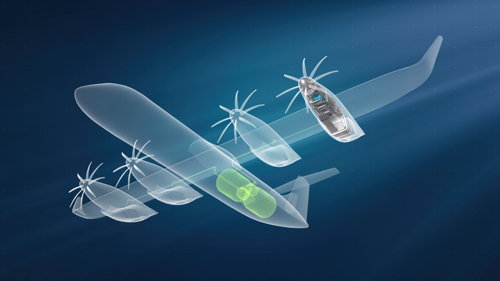
By establishing a dedicated and highly agile organizational set-up, the partners aim to accelerate technology development, design, testing and certification of a revolutionary propulsion system for aviation based on a hydrogen fuel cell. The new entity will be supported by Airbus and MTU with all their competences and through various engineering and manufacturing teams from both organizations.
This non-binding agreement is subject to standard regulatory approvals and the completion of social processes at European and national levels. The new joint venture is expected to start operations in 2027.
“Our planned joint venture is the next logical step in our shared vision of a hydrogen-based propulsion concept for aviation,” said Bruno Fichefeux, Head of Future Programs at Airbus. “By pooling our respective technology and expertise into a dedicated entity, we are establishing a European powerhouse capable of transforming advanced research into industrialized, certifiable electric propulsion systems. This new company will help secure strategic sovereignty in the next generation of aviation technologies while strengthening our ability to achieve the long-term ZEROe ambition."
“Our ambitious goal is to pave the way for a newly developed, safe, reliable and economical
propulsion system that will contribute to climate-neutral aviation,” said Dr. Stefan Weber, SVP Engineering and Technology at MTU Aero Engines. “This project is a crucial milestone on our path to the first hydrogen-powered engine – and this is true European technology leadership. To that end, we want to create a company that covers the entire life cycle of fuel cell powertrains – from development and testing through certification to commercialization.”
Hydrogen has the potential to play a crucial role in substantially reducing the climate impact of aviation in the long term and transforming air transport in a way comparable to the impact of electric vehicles in the automotive sector.
The joint venture is driven by the partners’ shared ambition to create the technology leader in this field and provide the first hydrogen--based fuel cell propulsion system to a commercial aircraft. It will combine Airbus’ extensive commercial aircraft program knowledge, significant fuel cell propulsion and liquid hydrogen expertise with MTU’s multi-year fuel cell technology development and its recognized engine design, integration, validation and certification as well as maintenance expertise.
Beyond the engine technologies, Airbus and MTU will continue to foster the emergence of a hydrogen aviation economy and the associated regulatory framework, which are also critical enablers to the advent of hydrogen-powered flight at scale.
Related News
- Michelin and Axens enter into discussions to accelerate the deployment of a key bio-based molecule for green chemistry
- Airbus and MTU Aero Engines partner to develop/commercialize fully electric hydrogen fuel cell engine
- Digital Feature: Margin left on the table: The hidden cost of supply chain capability gaps in hydrocarbon processing—Part 2



Comments