


How laser technology cuts through traditional reliability and confidence concerns in industrial gas analysis
RHYS JENKINS, Servomex, Crowborough, England, UK

Refineries and petrochemical production are punishing environments for gas analysis. They are hot, dirty and particulate rich. Keeping control of a process demands a purpose-built solution. Lasers have transformed what is possible, with no sensors in the gas stream, no sample extraction and no cleaning required. This means measurements are near-instant, uncompromised and truly representative of the live process.
Companies are increasingly turning to tunable diode lasers (TDL) for precise, low-maintenance, real-time data. This industry shift is expected to drive annual growth of 8.2% from 2025–2033. In today’s industrial plants, workforce shrinkage means fewer eyes on critical equipment. At the same time, efficiency targets leave no room for error. Operators need to be able to trust the data without hesitation.
The evolution of laser precision. Gas analysis and sampling have come a long way. But in refining and petrochemicals, techniques designed for cleaner environments simply do not stand up. Sample conditioning systems introduce several failure points, including lag, blockage, fouling and moisture drop-out. They also raise the constant question of whether a deviation originates in the sampling system or the analyzer.
Combustion analysis is a good example. Historically, gas was extracted and fed into an analyzer—either hot, wet and dirty, or cleaned for a paramagnetic system. Zirconia analyzers took a step forward by placing a sensor in the process, but dirty samples still need filtering. And the moment you do, it is no longer a true reflection of live conditions, as filters cause delays. Industry needed a robust and reliable way to remove doubt and measure the real process, in real time, without having contact with it.
Laser focus for precision results. Laser gas analysis marks a paradigm shift in how industrial processes are monitored. It moves measurement from single-point to line-of-sight (spectra average). Instead of relying on a sensor in one location, a laser beam interrogates the entire optical path. This captures a richer, more representative picture of the process. This delivers faster, more stable data. It averages conditions across the full gas stream rather than a single contact point.
Another advantage is that the analyzer itself never touches the process. The beam enters the gas. The hardware stays outside, away from particulates, corrosive gases and extreme temperatures. That means no contamination, no process sample handling and no conditioning. It also removes the biggest causes of delay and uncertainty in traditional systems. The result is a near-instant response and a measurement reflecting the live process without compromise.
Eliminating extraction, filtration and manual intervention reduces user error. It also lowers maintenance burden and the risk of misleading data. In doing so, it provides a clear, stable window into process performance. This is exactly what heavy industry needs when reliability, speed and confidence are non-negotiable.
Laser limitations and how modern analyzers overcome them. Like any process instrument, lasers have their limitations. Dense particulates or moisture can scatter light and attenuate its reach. The effect is similar to using a flashlight on a foggy night. Another consideration is that mechanical movement or vibration will move the laser beam. The installation must be robust as physical alignment, transmitter to receiver, matters.
However, the latest designs take these realities into account. Compact systems like the SERVOTOUGH Laser 3 Plus series (FIG. 1) from Servomex reduces weight and footprint, easing installation and minimizing stress on process structures. Another challenge is trace-level measurement.
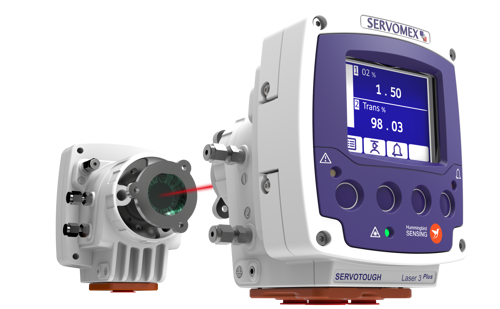
FIG. 1. View of Servomex's SERVOTOUGH Laser 3 Plus series
In some processes, there is almost none of the target gas. One example is carbon monoxide (CO) in a well-tuned combustion process. In these cases, the laser is effectively looking at a blank canvas. Temperature changes can easily cause the wavelength to drift, but line lock technology solves this. A sealed cuvette containing the target gas provides a permanent reference. A portion of the beam is routed through this cuvette. This helps the laser lock onto the correct wavelength, even when the process contains no measurable gas. This achieves unwavering stability and confidence in the reading.
And while no diode lasts forever, lifetimes of over seven years for oxygen, and longer for CO and ammonia, are standard, alongside no contact wear, no consumables and minimal maintenance.
Future-proof your process in non-depleting detail. As industrial regulations tighten and operational parameters narrow, gas analysis is key to keeping production safe, efficient and compliant. Laser analyzers, like the SERVOTOUGH Laser 3 Plus series, offer a long-term, future-proof solution. Their precise, stable measurement delivers consistent performance without drift or depletion, supporting digital integration, predictive maintenance, and diagnostics. Fewer engineers can manage more assets with greater confidence.
When upgrading, look for an analyzer that continuously verifies its own measurement, not simply assumes it. A robust solution should provide continuous assurance that measurements are reliable. Maintenance demands should be low—flows must be correct, purge gases managed properly and supported by a supplier with proven application expertise.
Laser technology is not a silver bullet. With the right design, stability features and deployment support, it delivers long-term process reliability and resilience. This level of operational confidence is demanded by even the harshest industrial environments.
Learn more about the SERVOTOUGH Laser 3 Plus series: www.servomex.com/laser-3-series


Comments