

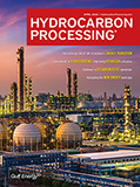
Reactors
Editorial Comment: Maintenance and reliability—A cornerstone of safe and efficient plant operation
Refineries and petrochemical plants are comprised of a series of crucial processes to produce transportation fuels, products and chemicals demanded by the global market. These processes consist of capital-intensive units that must be maintained to provide reliable performance. Failure to adequately maintain these assets can have a detrimental effect to not only operations and profit, but also to worker safety.
TOTAL refineries improve overhead systems corrosion and salting with amine-neutralizing technology
Weak organic amines are commonly used in crude unit overhead systems to prevent acidic corrosion from chlorides and other acidic contaminants via a neutralization reaction.
A solution to the IMO 2020 MARPOL Annex VI requirement
On January 1, 2020, a new requirement limiting the sulfur content of marine fuel to a maximum of 0.5 wt% went into effect.
Meeting the Tier 3 challenge with ultra-clean alkylate
The U.S. Environmental Protection Agency (EPA) introduced Tier 3 gasoline sulfur standards in 2017, requiring all U.S. gasoline producers to adhere to an annual 10-ppm average sulfur limit.
Leveraging digital technologies to create the smart renewable diesel facility
Many companies are modifying existing crude refineries or building grassroots renewable diesel facilities to produce drop-in, green renewable diesel from a variety of agriculturally derived triglyceride feedstocks.
Industry Perspectives
The hydrocarbon processing industry (HPI) is steadily advancing through the energy transition.
Fuels and chemicals: Finding the right refinery configuration for a less predictable world
The refining industry links the upstream production of crude oil with the end markets for fuel products, as well as for the petrochemical/chemical industry.
FCC NOx reduction methods: Complying with regulations without capital investment
As fluid catalytic cracking (FCC) nitrogen oxides (NO<sub>x</sub>) emissions regulations become increasingly strict, refiners are driven to find the most economic compliance option.
How to support condition monitoring with wireless instrumentation networks
When <i>Wireless</i>HART first hit the market in 2008, most of the native devices using it were process measurement instruments.
Hydrocarbon Processing Top Project Awards 2020
The global hydrocarbon processing industry (HPI) continues to expand and modernize to efficiently meet growing demand for energy, transportation fuels and petrochemicals.

- Utility Global signs first commercial project agreement in South Korea for H2Gen Project in Daejeon 6/10
- ENGIE and European Energy start cooperation on large-scale renewable hydrogen development in Denmark 6/10
- Yokogawa enhances OpreX collaborative information server 6/10
- WinGD powers delivery of world’s first ocean-going ammonia-fueled vessel 6/10
- Higher blending targets drive RIN prices close to record highs 6/10
- Hyundai wins contract to build gas processing plant at Kazakhstan's Karachaganak field 6/10