

Process Optimization
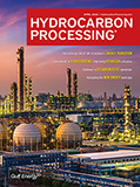
Create business value with human-centric digital transformation
In today’s turbulent global geopolitical and economic landscape, key decision makers at industrial manufacturing organizations are exercising caution when considering new spending. However, despite this moderation, company shareholders expect ever-increasing returns.
The concern of CO emissions
No refinery can operate without hydrogen (H<sub>2</sub>) because it is needed in all hydroprocessing technologies to remove sulfurous impurities and produce products at the correct specifications. With each passing day, the importance of H<sub>2</sub> in refineries is increasing as crude oil gets heavier and more sour while product specifications are simultaneously getting tighter.
Decarbonization opportunities in refinery and petrochemical complex-organic Rankine cycles
In an organization’s pursuit of decarbonization, significant opportunities exist in recovering waste heat from high-temperature streams instead of rejecting it to heat sinks. This article analyzes the economics of using the organic Rankine cycle (ORC) to recover waste heat and generate electricity.
Editorial Comment: Maintenance and inspection pathways/technologies to optimize unit reliability
Unit uptime is one of the most important aspects in refining and petrochemical plant operations. Work stoppages due to any number of causes can be detrimental to profitability; therefore, it is imperative to utilize best practices, technologies, techniques and know-how to ensure processing units operate efficiently and safely.
An innovative process for simultaneously producing high-purity benzene and U.S.-grade gasoline from FCC C6 heartcut
Mobile Source Air Toxics (MSAT) II regulations restrict the average benzene level in gasoline sold in the U.S. to 0.62 vol%. In India and in several other countries, benzene in gasoline is presently restricted to 1 vol%. Fluid catalytic cracking (FCC) gasoline contributes to nearly 10%–20% of the gasoline pool in a typical refinery.
Decarbonize the FCCU through maximizing low-carbon propylene
As the global energy system continues to be threatened by geopolitical tensions, the refining industry continues to demonstrate an outstanding capacity for adaptation.
Pellet handling system for polyolefin plants: Are you specifying it correctly?
Product pellets produced in polyolefin plants—such as polyethylene (PE) or polypropylene (PP)—require transportation from the unit to the end users that process these pellets to manufacture different end-use plastic products.
- Lummus Technology launches Thermacrack™ C5 to unlock higher-value specialty chemicals production 5/28
- Million-dollar award awaits winner in clean fuel race for ships 5/28
- PTT Global Chemical and SCG sign MoU to explore olefins/polyolefins JV in Thailand 5/28
- Pembina greenlights 750-MMft3d Heartland Extraction Plant to provide ethane feedstock to Dow Chemical 5/28
- Honeywell and McNeese State University partner to train the LNG workforce of the future 5/28
- KBR’s PureSAF technology selected for Northern Europe’s SAF and eSAF plant by NorSAF 5/28