


U.S. gasoline market set for fresh test after near-record stock draws
A near-record run of U.S. gasoline inventory drawdowns is flashing a stark warning for fuel markets: the system is losing its buffer just as seasonal demand crests.
That combination does not guarantee shortages - but it sharply raises the odds of sudden, outsized price moves if anything goes wrong in terms of replenishing inventories as the peak U.S. driving season gets underway.
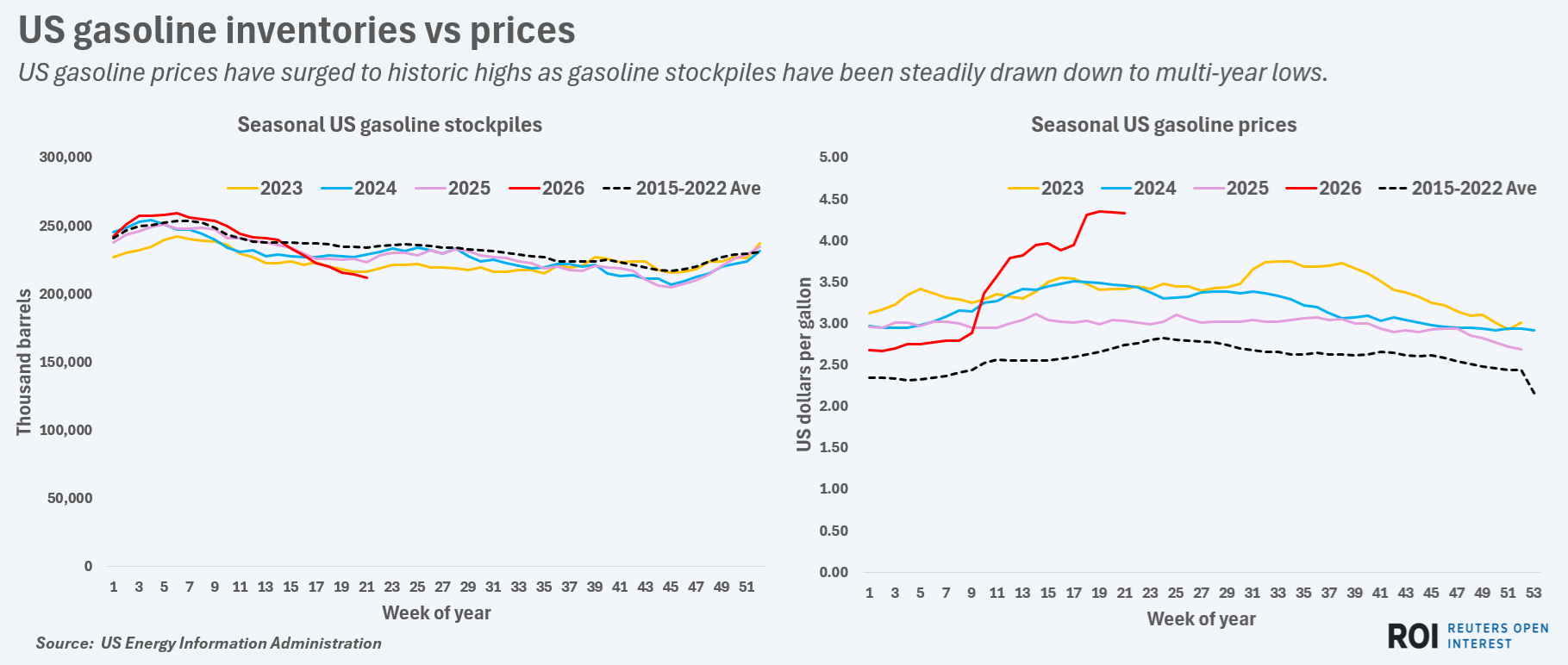
U.S. gasoline prices have already jumped by 50% to close to four-year highs since the U.S. and Israeli war against Iran began on February 28, and currently average around $4.33 per gallon, U.S. Energy Information Administration (EIA) data shows.
But prices could now be primed to take a fresh leg higher after 15 straight weeks of gasoline inventory reductions have drawn national stockpiles to their lowest for this time of year since 2014.
(click image to enlarge)
A durable peace deal in the Middle East that speedily restores tanker traffic through the Strait of Hormuz could help avert further steep reductions to U.S. gasoline stocks and may limit additional price gains over the near term.
But any resumption in military hostilities that threatens to further hamper oil production and exports from the Middle East will likely spark a fresh rally in U.S. gasoline prices this summer, stoking cost-of-living fears across the country.
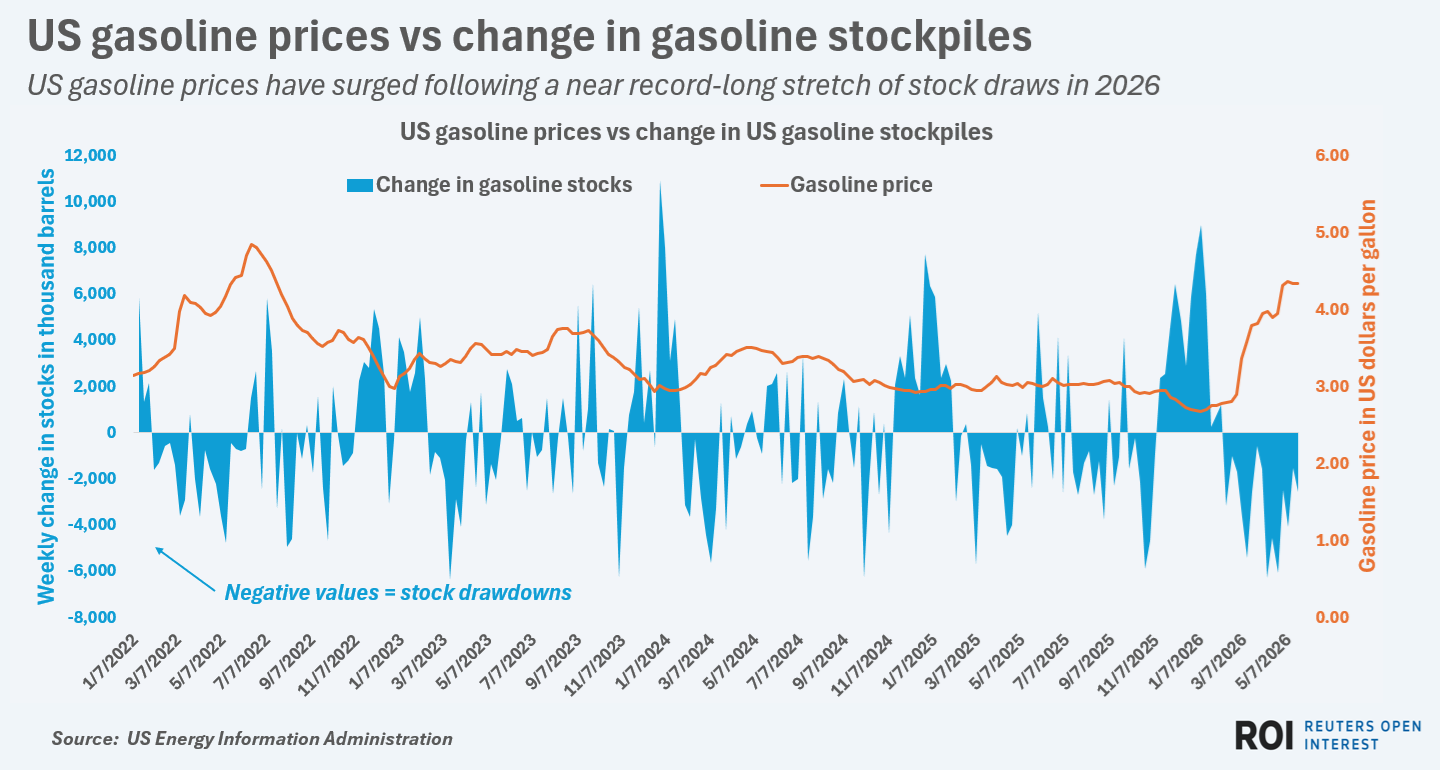
RECORD RUN. The 15-week stretch of U.S. gasoline stock declines since mid-February is equal to the longest run of stock draws on record, which occurred between mid-February and late May of 2012, EIA data shows.
(click image to enlarge)
U.S. gasoline inventories are currently around 211.5 million barrels, down from over 253 million barrels just before the Iran conflict kicked off and around 5.5% below the five-year average for this time of year.
One further weekly stock decline will put 2026 in the record books for the longest-ever span of continuous cuts to national gasoline stockpiles without replenishment. EIA stocks data will next be updated on June 3.
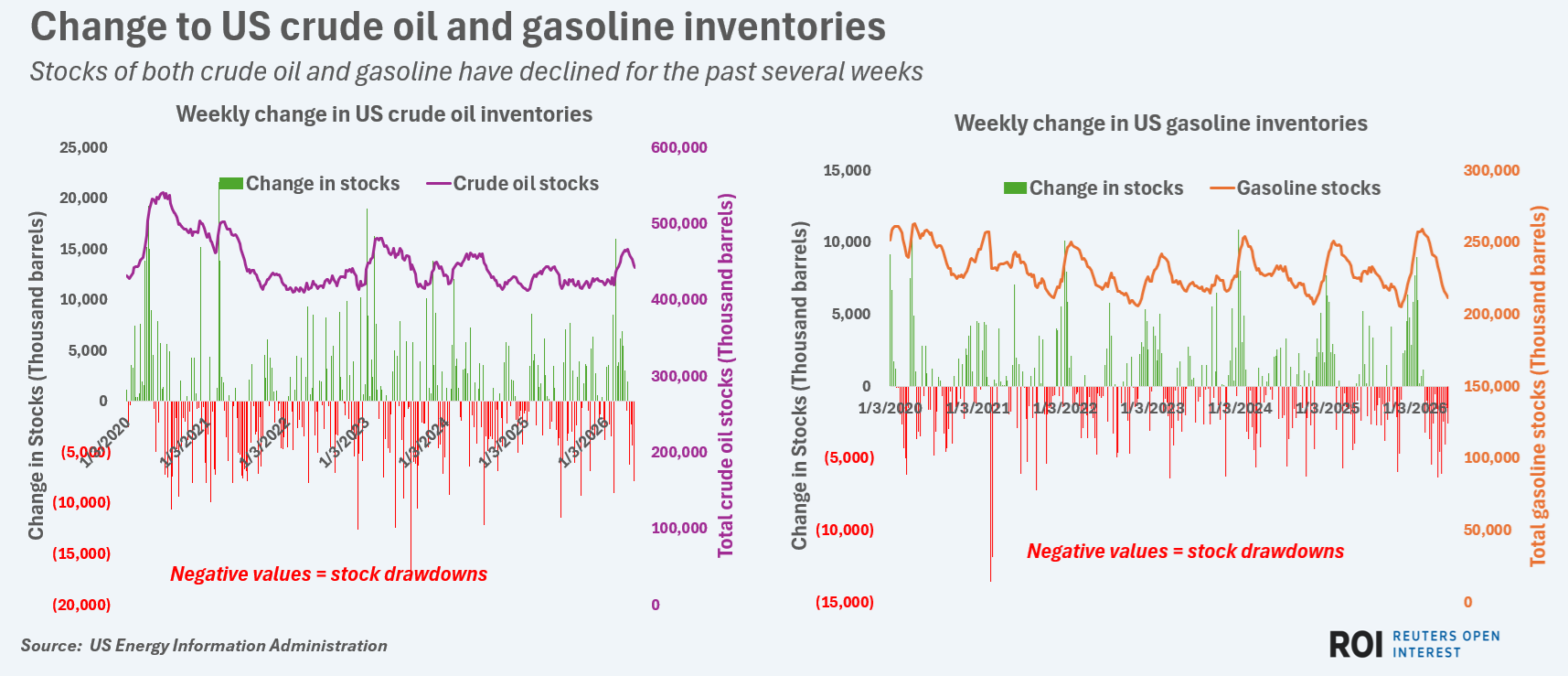
And a further cut looks likely given that national gasoline use is steadily rising as families start to take their summer vacations just as domestic crude oil inventories also undergo a steep contraction due to shortages stemming from the Iran war.
U.S. crude oil inventories are on track for their sixth straight weekly decline, which would be the longest run of weekly oil contractions since late 2024.
(click to enlarge image)
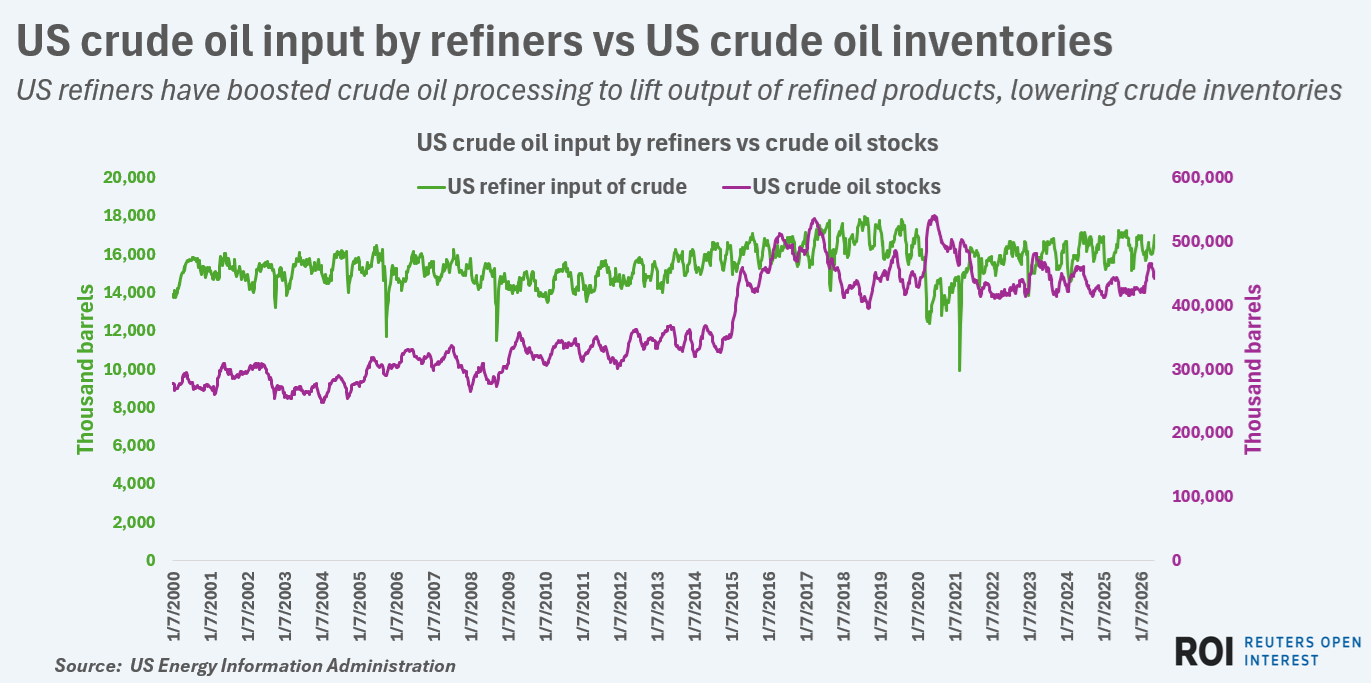
RISING PROCESSING RATES. Additional declines to crude stocks look likely as U.S. refiners lift processing rates in order to boost output of refined products.
U.S. refiners processed 16.9 million barrels of crude oil last week, which was the highest weekly processing volume since last November, and should result in a climb in refined product volumes.
However, it is unclear how much of that extra supply will make it onto the local market, as many U.S. refineries are geared towards serving export markets as international gasoline and diesel prices are often higher than domestic rates.
(click image to enlarge)
In any event, very few increases in domestic gasoline stockpiles are likely any time soon, as whatever surplus fuel supplies do make it onto the U.S. market will likely be snapped up by retailers to meet rising domestic consumption needs.
And those consumption trends are only likely to climb as the end of the U.S. school year marks the start of the busiest period for U.S. drivers, when households hit the road for vacations and family visits.
That rising demand will in turn likely result in further draws on U.S. gasoline stockpiles, and may trigger further increases in gasoline prices that are already hovering near multi-year highs.
The opinions expressed here are those of Gavin Maguire, a columnist for Reuters.



Comments