


EIA: U.S. jet fuel production rises after prices doubled in March
According to the U.S. Energy Information Administration (EIA), weekly estimates suggest U.S. jet fuel production has increased to record highs in response to elevated jet fuel prices after the Strait of Hormuz closed on February 28. Higher crude oil prices and supply concerns, particularly in Europe and Asia, which previously imported much of their jet fuel supply from the Persian Gulf, have driven up jet fuel prices. Much of the increased U.S. jet fuel production is being exported, as domestic inventories remain above average.
(click image to enlarge)
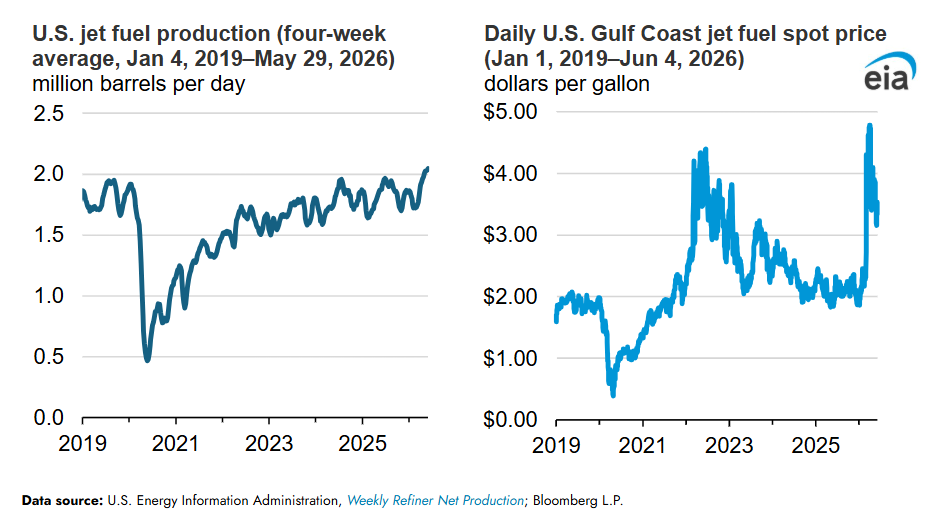
U.S. jet fuel production has increased since February 28 when the four-week average production was 1.7 MMbpd. In the week ending May 1, the four-week average estimate of U.S. jet fuel production surpassed 2 MMbpd for the first time on record. The increased production reflects both above-average refinery runs and strategic shifts to increase jet fuel yields.
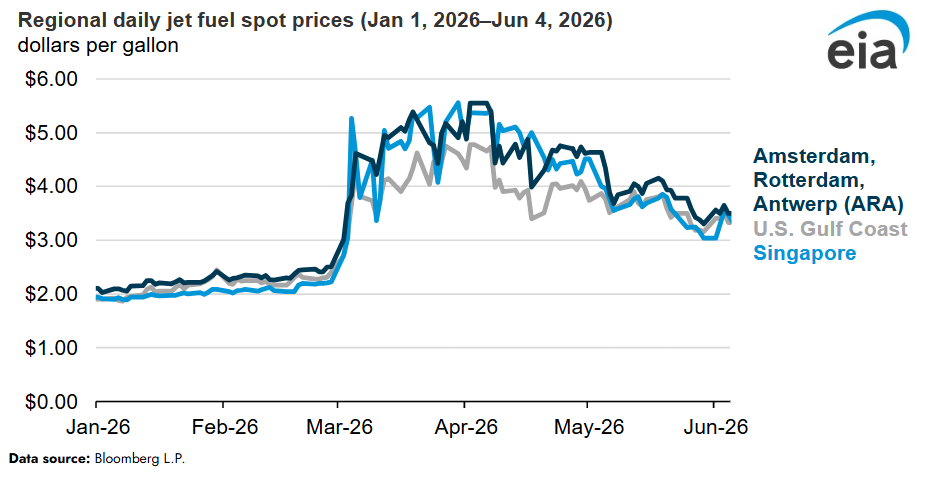
U.S. refiners have been maximizing jet fuel production to take advantage of high jet fuel prices and margins. From March through May, U.S. Gulf Coast Jet Fuel Spot prices averaged $3.91 per gallon (gal), about double the price at the start of the year and higher than the regional spot prices for both gasoline and diesel fuel. The jet fuel crack spread on the U.S. Gulf Coast, an indicator of the profitability of refining crude oil into jet fuel in the region, averaged $1.25/gal in the same period, up from $0.42/gal at the start of the year. Jet fuel prices at other major global trading hubs—such as Amsterdam, Rotterdam, Antwerp (ARA) and Singapore—also averaged about double their start-of-year prices from March to May and had higher jet fuel crack spreads.
Jet fuel prices in Europe and Asia traded at significant premiums to the U.S. Gulf Coast in March and April, attracting sources to replace imports from the Middle East. In response to the price increases abroad, weekly estimates based on transactional trade data from U.S. Customs and Border Protection indicate U.S. jet fuel exports reached record highs in April and May. Jet fuel prices in Europe and Asia are now closer to U.S. Gulf Coast prices, and prices are lower than their April peaks in all three regions as concerns of an imminent jet fuel shortage have eased.
(click image to enlarge)
Despite increased export demand, jet fuel inventories in the United States have remained above average. U.S. jet fuel inventories as of May 29 totaled 45 MMbbl, 7% above the 2021–2025 average. Inventories in the U.S. West Coast, the U.S. region that relies most heavily on jet fuel imports, also remain above average. However, if the recent decline in imports to the West Coast continues, the region may need to increase draws from inventories.



Comments