


Digital Exclusive: Are you overlooking an easier sulfiding solution?
J. A. Jackson, Lubrizol, Wickliffe, Ohio (U.S.)
Dimethyl disulfide (DMDS) has long been the default choice of sulfiding agents in hydroprocessing catalysts, even though its inherent hazards can pose major operational challenges. However, for refiners, there is a better way.
For decades, widespread legislation has heavily limited sulfur and nitrogen content in common fuels to reduce sulfur oxide (SOx) and nitrous oxide (N2O) emissions from internal combustion engines. This is why refineries around the world have deployed hydroprocessing or hydrotreating techniques to remove sulfur and nitrogen as an essential part of gasoline and diesel fuel refining and production.
The hydrotreating process involves mixing hydrogen (H2) with the hydrocarbon feed inside a reactor filled with a catalyst—typically based on cobalt molybdenum (CoMo) or nickel molybdenum (NiMo). This catalyst requires sulfiding while the unit is operational. Typically, the catalyst starts as an inert form, with active metals in their oxide form. The catalyst is then sulfided by the reaction of its active metals with hydrogen sulfide (H2S), which is produced from a reaction between the available sulfur in the feedstream or—most commonly—a sulfiding agent (FIG. 1).

FIG. 1. Hydroprocessing units depend on safe, reliable sulfiding agents to ensure consistent catalyst performance.
Though it is possible to feed the catalyst with naturally occurring sulfur in the feedstream, doing so runs the risk of the catalyst surface accumulating coke before the sulfiding is complete, reducing the catalyst’s service life. Additionally, the burgeoning new fuel feedstocks— like those used to produce renewable diesel—contain no naturally occurring sulfur. Thus, a sulfiding agent must be introduced into the process.
When it comes to sulfiding agents, refiners have choices; however, the most commonly used agents may not always be the most advantageous. In this article, the author explores the pros and cons of different sulfiding agents and how refiners can make the best, most informed choice for their operations.
Comparing sulfiding agents. DMDS is the sulfiding agent most commonly used in refineries today, and has long been attractive due to its high sulfur content (68%) and low cost. As the “default” choice in many sulfiding applications, refinery engineers may not think to question it or search for an alternative.
However, DMDS brings with it some significant challenges when it comes to environmental health and safety. First and foremost, DMDS maintains a very low flash point of 61°F (16°C), which presents a potential fire hazard (FIG. 2). The material is usually stored under nitrogen pressure in closed containers to reduce fire hazards, and personnel are required to wear specialized personal protective equipment (PPE) when working with or handling it. Further, due to its low flash point, DMDS is regulated by the U.S. Department of Transportation (DOT), requiring the driver of the transport vehicle to remain with the vehicle at all times and the vendor to maintain closed chain of custody.

FIG. 2. Operational teams must account for the safety and handling challenges associated with traditional sulfiding agents such as DMDS.
Elsewhere, the hydrocarbon byproduct of DMDS is methane (CH4), which accumulates in the H2 plus H2S recycle gas stream. This leads to dilution of H2 in the recycled gas during the sulfiding process, sometimes requiring purging of the CH4 and the addition of makeup H2 to maintain the required H2 partial pressure. The flaring of the purged gas which contains H2S, can produce undesirable SOx emissions from the hydroprocessor.
Finally, DMDS has an extremely unpleasant odor, sometimes likened to the smell of rotting cabbage, even in an open-air environment. Potential spills are not only hazardous, but odorous and unpleasant for workers and even the surrounding community.
For all of these reasons, most refineries will work to minimize the time DMDS must remain onsite for the catalyst sulfiding process. For traditional applications involving crude oil, the catalyst only needs to be activated every 3 yrs–5 yrs. Therefore, DMDS is required onsite only during these intervals for catalyst activation when a new catalyst is added to the reactor. However, since most refineries have multiple trains and catalysts that require activation, DMDS might be needed onsite once or twice per year, typically for about a week. Most turnarounds are performed in the spring or fall.
For renewable applications, however, catalyst activation is required once every 3 yrs. Additionally, without a constant stream of sulfur, the catalyst may foul, deactivate or coke. Thus, sulfur is added to the renewable stream or co-stream—where co-stream refers to processing both renewable feedstocks and crude oil together—to facilitate the processing of the feedstock. In situations where only catalyst activation is needed, DMDS can be easily supplied. However, for continuous supply, such as in renewable applications, the operation runs 24/7. Keeping DMDS onsite continuously is prohibitively disruptive and difficult, and renewables producers have sought alternatives.
Tert-butyl polysulfides (TBPS) represent a good alternatives (FIG. 3). TBPS are a sulfur-rich material that can help eliminate the challenges associated with DMDS. For example:
- TBPS maintain a high flash point, typically around 212°F (100°C), eliminating the excessive fire hazards associated with DMDS.
- TBPS can be stored at the refinery in basic containers without oversight and do not require the vendor to maintain closed chain of custody.
- Technicians can handle TBPS without additional PPE beyond what is typically worn for normal refinery operation.
- The byproduct of TBPS is isobutane which, in most refineries, exits the high-pressure separator with the liquid hydrocarbons instead of diluting the H2 in the recycle gas stream, as DMDS does. This reduces SOx emissions from the hydroprocessing equipment.
- TBPS produce sulfur at lower temperatures than DMDS, permitting sulfiding to begin at lower catalyst-bed temperatures, lowering the risk of irreversible reduction of the catalyst by H2.
- TBPS have a much milder odor compared to DMDS, with an odor that is comparable to the smell of typical diesel fuel. The odor dissipates easily and is virtually undetectable in an open-air environment.
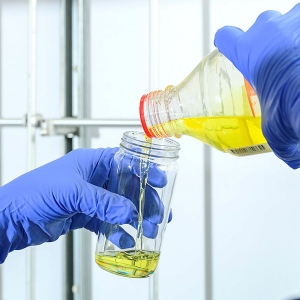
FIG. 3. Refiners benefit from easier handling protocols with TBPS, eliminating many of the precautions required for DMDS.
One consideration when evaluating TBPS for sulfiding purposes is that they maintain a lower sulfur content: 54% compared with DMDS’s 68%. This requires the dosage of TBPS to be slightly larger during the sulfiding process.
Achieving operational benefits. Overall, DMDS alternatives have the potential to deliver significant operational benefits for refineries. TBPS eliminate the costly and cumbersome handling and monitoring required of DMDS, which can offset the costs associated with TBPS higher dosing requirements. Combined with the low odor profile and reduced SOx emissions, it all amounts to enhanced environmental health and safety for workers, as well as an easier and more efficient sulfiding process.
For refiners of both traditional and renewable fuels, the choice of sulfiding agent can make a significant difference. Making a break from tradition has its benefits.
ABOUT THE AUTHOR
Jennifer A. Jackson works as the Technology Manager at Lubrizol, overseeing product line innovation and R&D for upstream oilfield and refinery chemistry. She leverages her technical and market expertise to develop growth strategies with a focus on innovative technologies. Dr. Jackson earned her PhD in inorganic chemistry from the University of Texas at Austin and a BS degree in chemistry from Wichita State University, Kansas (U.S.). She has numerous publications and patents to her credit, establishing her as a leader in oilfield and refining chemistry.



Comments